Which is Better Value? Sony Wh 1000Xm6 vs Sony Wh 1000Xm4 Compared
The premium noise-canceling headphone market has long been dominated by Sony. For years, the Wh 1000X series has set the benchmark for what consumers expect from over-ear wireless audio: industry-leading noise cancellation, exceptional battery life, and a suite of smart features that actually work. However, as the product line matures, a fascinating dilemma has emerged for potential buyers. While the Sony Wh 1000Xm6 represents the absolute pinnacle of Sony’s current engineering, the Sony Wh 1000Xm4—now two generations older—remains on the market as a legendary value proposition. This comparison explores whether the latest innovations in the M6 justify its premium price tag or if the classic M4 remains the smarter choice for the budget-conscious audiophile.
When looking at the Electronics category today, we see two distinct philosophies. The Wh 1000Xm4 is the "refined classic," representing the last iteration of Sony’s iconic foldable design and original sound signature. The Wh 1000Xm6, on the other hand, is the "future-forward evolution," utilizing improved materials, more advanced processing chips, and a design language that prioritizes lightweight comfort over portability. For the average traveler, office worker, or student, the choice isn't just about which one is better on paper, but which one offers the most meaningful utility for every dollar spent.
Analysis of the Sony Wh 1000Xm6
The Sony Wh 1000Xm6 arrived with the burden of expectation. Following the controversial design shift of the M5, the M6 doubles down on a slim, non-collapsible aesthetic while introducing significant internal hardware upgrades. The heart of the M6 experience is the dual-processor system—the Integrated Processor V2 and the HD Noise Cancelling Processor QN2. These chips work in tandem to process ambient sound at a rate significantly faster than previous models, leading to a noticeable improvement in "high-frequency attenuation." This means the M6 is better than ever at silencing unpredictable sounds like office chatter or the screeching of subway brakes.
Audio quality has also seen a subtle but important shift. Sony moved to a new 30mm carbon fiber driver in this generation. While smaller than the 40mm drivers found in older models, the carbon fiber construction is stiffer and lighter, allowing for faster response times and improved clarity in the high-mids and treble. For users who found earlier Sony headphones too "bassy" or "warm," the M6 offers a more balanced, analytical sound out of the box. Furthermore, the microphone array has been completely overhauled. With eight beamforming microphones and advanced AI-driven wind noise reduction, the M6 is arguably the best "office" headphone Sony has ever made, ensuring crystal-clear voice calls even in windy outdoor environments.
From a usability standpoint, the M6 introduces improved wear sensors and faster Multipoint Connection switching. The battery life remains stellar, reaching up to 30 hours with Noise Canceling (NC) on and closer to 40 with it off. However, the most significant change for many is the comfort. The "Soft Fit Leather" and the lighter headband tension allow for hours of fatigue-free listening, though the lack of a folding hinge remains a point of contention for those with limited bag space.
Pros and Cons: Sony Wh 1000Xm6
- Pro: Best-in-class Active Noise Cancellation (ANC), particularly effective against human voices and high-pitched sounds.
- Pro: Carbon fiber drivers provide superior clarity and a more transparent soundstage compared to older models.
- Pro: Exceptional microphone quality for professional calls and remote work.
- Pro: Faster charging times; a 3-minute charge can provide up to 3 hours of playback.
- Con: Non-folding design makes it bulkier to transport in its carrying case.
- Con: High entry price compared to older models that offer 80% of the same performance.
Analysis of the Sony Wh 1000Xm4
The Sony Wh 1000Xm4 is often cited as the "sweet spot" in Sony's lineage. Released at a time when Sony had perfected the folding chassis, it remains many people’s favorite due to its tactile ergonomics and legendary durability. Unlike its successors, the M4 can fold into a compact shape, making it the favorite of frequent flyers who value every square inch of their carry-on. Internally, it uses the HD Noise Cancelling Processor QN1, which, while older, still holds its own against modern rivals. It produces a "cocoon of silence" that is particularly effective at blocking the low-frequency drone of airplane engines and air conditioners.
The sound profile of the M4 is classic Sony: warm, punchy, and energetic. It uses 40mm drivers that deliver a satisfying bass thump that many modern listeners prefer for hip-hop, electronic, and pop music. While it may lack the surgical precision of the M6's carbon fiber drivers, it offers a "fun" listening experience that is very forgiving of lower-quality audio streams. It also supports LDAC, Sony’s proprietary codec for high-resolution wireless audio, ensuring that Android users can enjoy near-lossless quality.
Discover deals on Electronics — updated daily.
Browse Now →The M4 was also the first in the series to introduce Multipoint Connection (pairing with two devices simultaneously) and the "Speak-to-Chat" feature, which automatically pauses music when it detects the wearer speaking. These features have aged remarkably well. While the M4’s microphones are not as sophisticated as the M6’s—struggling more with wind noise—they are perfectly adequate for standard indoor calls. Given that the M4 is frequently available at a significant discount, it represents a "pro-level" experience at a "mid-range" price point.
Pros and Cons: Sony Wh 1000Xm4
- Pro: Fully foldable design is much more portable and travel-friendly than the M6.
- Pro: Exceptional value for money, often costing hundreds less than the latest flagship.
- Pro: Warm, bass-rich sound signature is highly enjoyable for modern music genres.
- Pro: Includes all essential "smart" features like LDAC, Multipoint, and Speak-to-Chat.
- Con: Microphone performance is mediocre in windy or noisy environments.
- Con: ANC is slightly less effective at blocking mid-to-high frequency noises (like voices) compared to the M6.
Technical Comparison Table
| Feature | Sony Wh 1000Xm6 | Sony Wh 1000Xm4 |
|---|---|---|
| Driver Type | 30mm Carbon Fiber | 40mm Dynamic (Liquid Crystal Polymer) |
| Processors | Integrated Processor V2 + QN2 | QN1 Processor |
| Design | Slim, Non-Collapsible | Foldable / Collapsible |
| Microphones | 8 Microphones (Beamforming + AI) | 5 Microphones |
| Battery Life (ANC On) | 30 Hours | 30 Hours |
| Charging | USB-C (Fast Charge: 3min = 3hr) | USB-C (Fast Charge: 10min = 5hr) |
| Bluetooth | Version 5.4 (LE Audio support) | Version 5.0 |
Buying Guide: Which One Should You Choose?
Deciding between these two titans of the Electronics world requires an honest assessment of your daily habits and your sensitivity to audio nuances. While both are high-quality pieces of technology, they cater to slightly different needs. Use the following guide to determine which model aligns with your priorities.
Choose the Sony Wh 1000Xm6 If...
The M6 is the choice for the "power user." If you spend several hours a day in video conferences or phone calls, the microphone improvements alone make the M6 worth the investment. The AI-driven noise reduction ensures you sound professional regardless of your surroundings. Furthermore, if you are a "critical listener" who prefers a neutral soundstage where you can hear the separation between instruments, the M6's new carbon fiber drivers will be much more satisfying than the older models. Finally, if you live or work in a highly chaotic environment—such as a crowded open-plan office or a busy city apartment—the superior high-frequency noise cancellation will provide a level of focus that the M4 can't quite match.
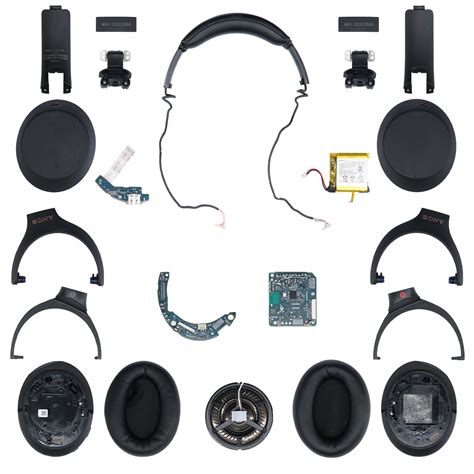
Choose the Sony Wh 1000Xm4 If...
The M4 is the ultimate choice for the "practical traveler" and the "value seeker." If your headphones spend a lot of time in a backpack, suitcase, or laptop bag, the ability to fold the M4 down to a compact size is a massive advantage. You won't have to worry about the rigid headband of the M6 taking up precious space. From a financial perspective, the M4 is hard to beat. You are getting roughly 85-90% of the performance of the flagship for a fraction of the cost. If you mostly use your headphones for music and movies rather than professional calls, the performance gap between the two becomes very narrow. For most people, the "classic" design and the warm sound profile are more than enough to justify sticking with the older model.

Sound Signature Considerations
It is important to note that "newer" doesn't always mean "subjectively better" in audio. The move from a 40mm driver in the M4 to a 30mm driver in the later models changed the "physicality" of the sound. The M4 has a certain air movement in the low end that feels very powerful. The M6, while having "faster" and "tighter" bass, doesn't always feel as impactful for bass-heavy tracks. If you are a "bass-head," you might actually prefer the sound of the cheaper Wh 1000Xm4. However, if you listen to jazz, classical, or acoustic music, you will likely appreciate the M6’s ability to render fine details and subtle textures without them getting masked by the lower frequencies.
Real-World Use Cases
To better understand the value, let’s look at how these headphones perform in common scenarios:
Discover deals on Electronics — updated daily.
View Offers →The Commuter: On a loud train, both headphones perform admirably at blocking the low-end rumble. However, when the conductor makes an announcement or a group of passengers starts talking loudly, the M6’s V2 processor identifies these higher-pitched sounds more quickly, dampening them more effectively. That said, the M4 is easier to shove into a jacket pocket once you reach your destination.
The Remote Worker: The M6 is the clear winner here. Its integration with modern Bluetooth standards allows for more stable connections with laptops and smartphones simultaneously. The "Quick Access" features on the M6 are more responsive, and the wear detection (pausing when you take them off) is much more reliable than the older sensor used in the M4.
The Student: For a student on a budget who needs something for long study sessions in the library, the M4 is the logical choice. It provides the necessary silence for deep work and stays comfortable for hours. The money saved by choosing the M4 over the M6 could be better spent on textbooks or other essential electronics.
Conclusion
When comparing the Sony Wh 1000Xm6 and the Sony Wh 1000Xm4, the "better value" depends entirely on your definition of the term. If value means "the most advanced technology available," then the M6 justifies its place at the top of the market. Its improvements in high-frequency noise cancellation, microphone clarity, and driver precision make it a specialized tool for the modern professional who demands the best.
However, if value means "the most performance per dollar," the Sony Wh 1000Xm4 remains the undefeated champion. It continues to offer a premium experience that surpasses many of its modern competitors from other brands. With its clever folding design, warm and engaging sound, and excellent battery life, the M4 doesn't feel like a "budget" compromise—it feels like a masterpiece of consumer electronics that has stood the test of time. For the majority of buyers, the M4 provides everything needed for a high-end audio experience, making it the smarter purchase for anyone who doesn't specifically require the M6’s advanced microphone array or cutting-edge processing.