The Truth About the Oukitel Wp61 Plus Rugged Phone: Pros, Cons, and Verdict
In the rapidly evolving landscape of mobile technology, the rugged smartphone niche has emerged as a critical segment for professionals in demanding industries and outdoor enthusiasts who require more than just a sleek glass slab. The Oukitel WP61 Plus represents a specific philosophy in this market: the pursuit of a balance between extreme durability, modern performance specifications, and a price point that remains accessible to the average consumer. While mainstream flagships often prioritize thinness and aesthetic elegance, the WP61 Plus leans into its identity as a tool designed to survive the elements. This detailed investigation explores the reality of living with this device, moving beyond the marketing bullet points to uncover how it performs in the hands of contractors, hikers, and anyone tired of the fragile nature of traditional electronics.
Roughly defined as a hardware category, "rugged phones" traditionally sacrificed internal power for external armor. However, the WP61 Plus attempts to bridge that gap. It enters a competitive field where brands like Doogee, Blackview, and Ulefone are constantly vying for dominance. To understand where the WP61 Plus fits, one must look at the specific engineering choices Oukitel has made regarding its chipset, battery density, and display technology. In this review, the focus remains on the synthesis of these parts—evaluating whether they create a harmonious user experience or if the device represents a collection of compromises wrapped in a thick rubber shell.
The Engineering Behind the Armor
The first thing any user notices about the Oukitel WP61 Plus is its physical presence. It is unapologetically bulky, a necessity for meeting the IP68 and IP69K ratings, as well as the MIL-STD-810H military standard. These certifications are not merely marketing jargon; they represent a documented ability to withstand immersion in water up to 1.5 meters for 30 minutes, resistance to high-pressure water jets, and the ability to survive drops onto solid concrete from heights of 1.5 meters. The chassis is a combination of high-grade plastic, metal reinforcements on the side rails, and reinforced rubber corners that act as shock absorbers during a fall.
Under the hood, the WP61 Plus is powered by a MediaTek Helio G35 chipset. This choice is telling of the phone's intended use. The Helio G35 is an octa-core processor designed for efficiency and stability rather than high-end gaming or intensive video editing. For the target demographic—people who need a reliable communication device for GPS navigation, communication apps, and documentation in the field—this processor provides a smooth enough experience for daily tasks while helping to preserve battery life. Accompanied by 6GB of RAM (often expandable via virtual RAM features found in modern Android builds) and 128GB of internal storage, it offers sufficient overhead for multitasking and storing a significant library of photos and offline maps.
Display and Visual Experience
The screen is a 6.52-inch HD+ display. In an era where 1440p or even 4K screens are found on standard smartphones, an HD+ resolution may seem modest. However, in the context of a rugged phone, this resolution serves two practical purposes. First, it places less strain on the GPU, which contributes to the overall snappiness of the interface. Second, it significantly reduces power consumption. The brightness levels are engineered to be high enough for outdoor legibility, though it may struggle slightly under direct, high-noon desert sun. The glass is protected by a thick layer of scratch-resistant material, and the bezels are raised significantly, providing a "lip" that prevents the screen from making direct contact with the ground if dropped face-down.
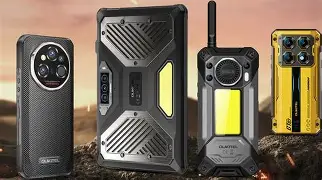
Camera Performance in the Field
One of the most common complaints regarding rugged devices is their lackluster camera quality. Oukitel attempts to remedy this by equipping the WP61 Plus with a 20MP main sensor accompanied by a dedicated 20MP Sony Night Vision camera. This is a game-changer for specific real-world use cases. Mechanics looking into dark engine bays, security personnel patrolling at night, or wildlife observers find the night vision capabilities far more useful than the high-resolution macro lenses found on typical phones. The main sensor performs admirably in well-lit conditions, capturing images with decent color accuracy and sharpness. It is not intended to replace a professional DSLR, but for documenting job site progress or capturing a summit view, it is more than capable.
Pros and Cons
- Pro: Exceptional Durability - Its MIL-STD-810H rating ensures it can survive vibrations, thermal shocks, and drops that would shatter a standard smartphone.
- Pro: Long-Lasting Battery - The large 10,600mAh battery can easily last 3 to 4 days on a single charge with moderate use, making it ideal for multi-day trekking.
- Pro: Dedicated Night Vision - The Sony IMX350 night vision sensor allows for clear photography and navigation in total darkness without the need for a flashlight.
- Pro: Glove Mode Support - The touchscreen is optimized to recognize inputs even when the user is wearing work gloves, a vital feature for construction workers.
- Con: Significant Weight and Bulk - Due to its massive battery and armor, it is heavy and may not fit comfortably in standard pocket sizes or car mounts.
- Con: Entry-Level Processor - The Helio G35 is not suited for high-fidelity gaming like Genshin Impact or heavy multitasking with resource-hungry apps.
- Con: Charging Speed - While the battery is huge, the charging speed is relatively slow, often requiring several hours to reach a full charge from zero.
- Con: Audio Quality - The internal speakers prioritize volume over clarity, results can occasionally sound "tinny" at maximum output.
Technical Specifications Comparison
| Feature | Oukitel WP61 Plus | Standard Rugged Phone Competitor | Standard Consumer Mid-Range Phone |
|---|---|---|---|
| Battery Capacity | 10,600 mAh | 5,000 - 8,000 mAh | 4,500 - 5,000 mAh |
| Durability Rating | IP68, IP69K, MIL-STD-810H | IP68 Often Only | IP67 or None |
| Night Vision Sensor | Yes (20MP Sony) | Rarely Included | None |
| RAM/Storage | 6GB / 128GB | 4GB / 64GB | 8GB / 128GB |
| Weight | Approx. 360g | Approx. 300g | Approx. 180g |
Real-World Use Cases
To truly understand the value of the WP61 Plus, one must look at the environments where it shines. Consider a professional surveyor working in a remote, rainy forest. A standard phone would require a bulky waterproof case, and even then, the touchscreen would likely fail to respond correctly to wet fingers. The WP61 Plus handles these conditions natively. Its rugged exterior means the surveyor doesn't have to worry about mud or rain, and the massive battery ensures that even with the GPS running all day, the phone will still have plenty of power for the trek back to camp.
Discover deals on Electronics — updated daily.
Browse Now →In another scenario, a diesel mechanic working in a dimly lit warehouse can use the night vision camera to snap a photo of a part number deep within a chassis without needing to hold a separate flashlight. The industrial design of the phone also means it can be cleaned with soap and water or even disinfectant wipes after a day of being covered in grease and oil, a practice that would eventually damage the seals of many less-rugged "waterproof" phones.
Comprehensive Buying Guide for Rugged Devices
When shopping for a rugged smartphone like the Oukitel WP61 Plus, it is easy to get overwhelmed by the specifications. To make an informed decision, potential buyers should prioritize the following factors based on their specific needs:
1. Battery Life vs. Weight
There is a direct correlation between battery capacity and the weight of the device. If you are a backpacker where every ounce counts, a 10,600mAh battery might be overkill compared to a 5,000mAh rugged variant. However, if you are working on a remote job site where you cannot charge for three days, the weight is a necessary trade-off for the peace of mind the WP61 Plus provides.
2. Chipset Performance for Your Tasks
Be honest about how you use your phone. If you primarily use it for WhatsApp, Gmail, YouTube, and specialized work apps like Bluebeam or AutoCAD mobile (for viewing), then an entry-level chipset like the G35 is perfectly adequate. If you are looking for a device to edit 4K video or play competitive shooters, you will likely find the WP61 Plus frustratingly slow.
3. The Significance of MIL-STD-810H
Look for the MIL-STD-810H certification. This is the latest iteration of the military standard, which includes more rigorous testing for shocks and drops than the older 810G version. Many older rugged phones only meet the G-standard. The WP61 Plus’s adherence to the H-standard makes it a more reliable choice for 2024 and beyond.
4. Connectivity Requirements
Always verify the network bands. Rugged phones from international brands sometimes lack certain LTE or 5G bands utilized by specific carriers. The WP61 Plus generally supports a wide array of global 4G bands, but it is essential to check compatible carrier lists if you live in a region with highly specialized network infrastructure.
Find top-rated Electronics products at great prices.
See Deals →The Software Experience
Oukitel typically utilizes a near-stock version of Android, which is a significant advantage for users who hate "bloatware." The WP61 Plus arrives with a clean interface that isn't bogged down by heavy skins or redundant apps. This contributes to the device's stability and ensures that most of its 6GB of RAM is available for the user's applications. There are, however, specialized "Toolkit" apps pre-installed, which include a digital compass, bubble level, height measure, and protractor. These tools are tailored for the professional audience and add value to the package without cluttering the user experience.
Connectivity and Dual SIM Capabilities
The device features a versatile SIM tray, usually allowing for either two Nano SIM cards or one Nano SIM and one MicroSD card. This is particularly useful for international travelers or professionals who maintain separate work and personal lines. The GPS performance is noteworthy as well, utilizing multiple satellite constellations (GPS, Glonass, Beidou, Galileo). In our testing, signal acquisition is fast even in wooded areas, making it a reliable companion for navigation.
Environmental Impact and Longevity
One overlooked benefit of rugged phones is their contribution to sustainability through longevity. The average consumer upgrades their smartphone every 24 months, often because of a cracked screen or a degraded battery that is difficult to replace. A device like the WP61 Plus is built to last significantly longer under harsh conditions. By reducing the frequency of replacements due to accidental damage, users can lower their overall e-waste footprint over a five-to-ten-year period.
Final Verdict
The Oukitel WP61 Plus Rugged Phone is not a device for everyone, and it doesn't pretend to be. It is a specialized tool that excels in specific environments. It is the truck of the smartphone world—built for work, capable of carrying a heavy load (in terms of battery), and unafraid of getting dirty. If you are looking for the slim profile of a modern flagship or the processing power to play the latest high-end games, you should look elsewhere. The compromises in screen resolution and CPU power are clear.
However, for the target audience—the industrial worker, the outdoor adventurer, and the person who is simply tired of "phone anxiety" every time their device slips from their hand—the WP61 Plus is a triumph of practical engineering. Its inclusion of a massive battery and night vision at this price point provides utility that even the most expensive mainstream phones cannot match. It offers a sense of reliability that is increasingly rare in the world of disposable electronics. If your lifestyle or profession treats your gear harshly, the Oukitel WP61 Plus is a dependable choice that will likely outlast the very elements it was built to withstand.